

My Soul Is... Split Series
Mixmag Interview x J Gabriel and Bruno Pronsato
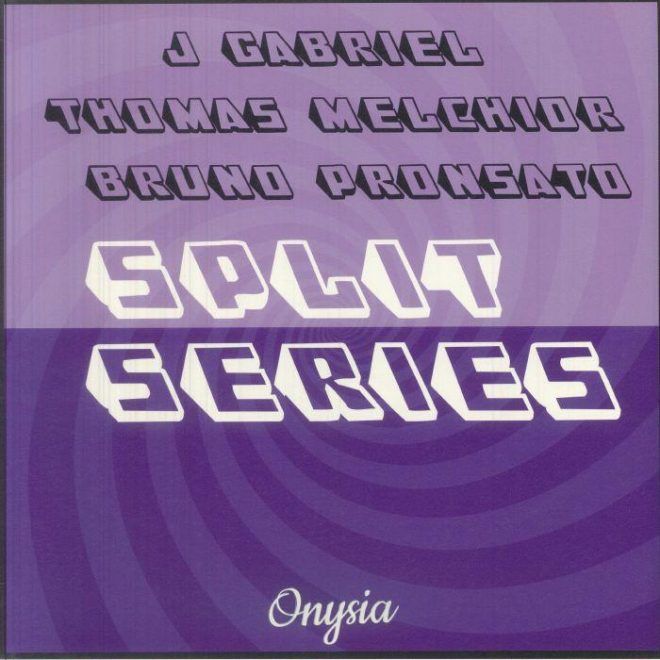
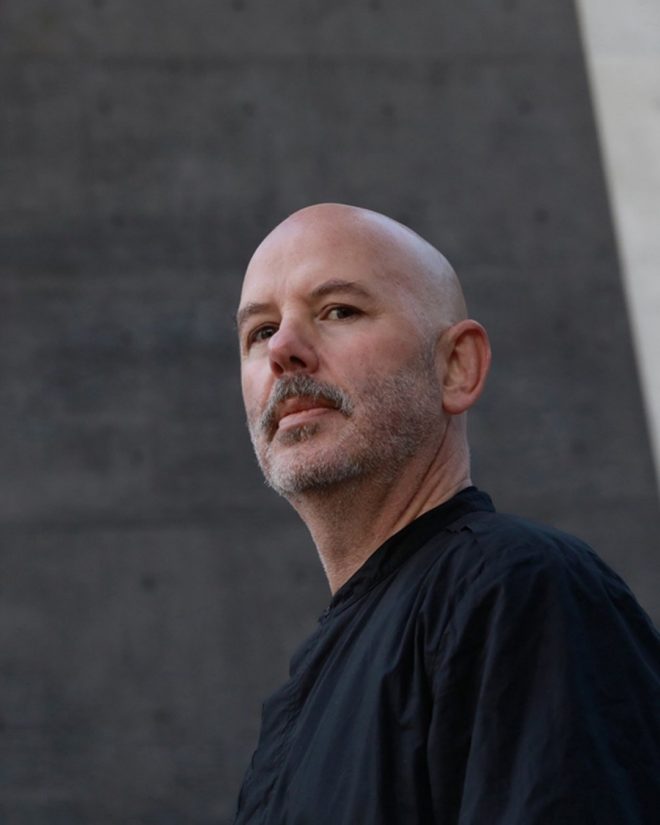
For its latest vinyl outing, Onysia brings together three distinctive voices from the deeper end of electronic music. My Soul Is... Split Series unites NYC producer J Gabriel with longtime collaborators Thomas Melchior and Bruno Pronsato across four tracks that blur the lines between deep house, minimalism and psychedelic groove. The result is a record that feels simultaneously playful and meticulous—full of subtle movement, strange textures and the kind of detail that reveals itself over repeated listens.
With contributions ranging from the hypnotic pulse of "Bells Spells" to the dreamlike drift of "My Soul Is" and Bruno Pronsato's reimagining on the "Bruno Soulcircus Mix," the release reflects the shared language these artists have developed over years of working at the fringes of house and techno.
Ahead of the release on Onysia, Mixmag spoke with J Gabriel and Bruno Pronsato about collaboration, creative trust, sound design and the enduring appeal of music that exists somewhere between the dancefloor and deep listening.
Both of you have built careers by following highly individual creative paths rather than chasing trends. In today's electronic landscape, how do you maintain artistic curiosity and avoid repeating yourselves?
J Gabriel: Well sometimes wish I could repeat myself more actually? Haha. Curiosity can come from a place outside of the day’s circumstances, ideally. I do my best to stay aware of the landscape of the moment, balancing that with lessons from the past. Artistic curiosity, it’s tied in with inspiration, isn’t it, those two things feed off each other in an important way. It’s useful to maintain some neuroplasticity, for lack of a better term… too easy for the brain to harden into stagnation over time, so whatever one can do to stay malleable and open to new ideas.
Bruno: In my experience, the only real way to avoid creative stagnation is simply showing up to the studio every day. I've always looked at it like a daily workout. When I'm pushing my own abilities on a daily basis, that's when I naturally start to stumble upon new ideas.
But I’ve also observed in my own work that you actually have to repeat yourself on some level to grow. It’s been my experience that you need that repetition to master the craft. The breakthrough ideas don't usually come out of nowhere; they happen in the subtle shifts that occur while I'm doing daily, repetitive work."
At what point did you realize there was a genuine musical connection between you rather than simply a mutual respect for each other's work?
Bruno: I’m pretty sure Thomas Melchior was playing something they had done together when I was at his place one time. I distinctly recall knowing the track was a Melchior cut, but there was something else in there that definitely wasn't Melchior. That's when he told me about Joseph. Almost a week later, Joseph hit me up for a remix. Since then, it’s been remixes, collaborations, you name it—and we mail almost weekly now.
J Gabriel: Yeah I think it started with Bruno’s remix on the J Gabriel & Thomas Melchior - Specimen EP. A huge amount of work went into that release, and the remix is just above and beyond… It’s so satisfying when you get something singular like that and it completely elevates the release to another dimension. You can never expect that, but when it happens it's really special. That’s still one of my favorite cuts in recent memory…
J Gabriel, your productions often combine intricate sound design with a playful sense of groove. Bruno, your work has long challenged conventional notions of rhythm and structure. How do your individual approaches complement one another when working on a shared project?
Bruno: I’d definitely say Joseph's sense of playfulness is what attracted me. In most instances, playfulness in music actually diminishes my attraction to it—historically, it’s always been the more abstracted versions of music that appeal to me. But Joseph has a very well-crafted, mature sense of playfulness that is incredibly, incredibly rare. It works because it gives my abstract leanings a completely different kind of life.
J Gabriel: I think that’s what allows the collaboration to flow, you want to bring your unique voice and perspective to a project like this whenever possible… And there’s a certain amount of unpredictability which is exciting, the prospect of arriving at something a bit unconventional. Possibly it’s the core idea that gets massaged and amended or perhaps the whole script gets flipped. There’s always so much to learn in musical language, the more I’m able to construct pieces with some awareness of the underlying energies, the better. And that’s part of what the collaborative process helps me to better understand, in a way... because the intentionality shifts when there’s more than one person involved, it becomes this interplay. And for me noticing some subtleties of what you’ve done becomes a bit more readily perceived, which is invaluable.
The minimal scene has evolved significantly over the past two decades. From your perspective, what elements of minimal music still feel exciting and unexplored today?
Bruno: Dance music has always been incredibly cyclical; it seems like each year brings a new approach to the so-called minimal sound. But hilariously, to my ears, the most exciting thing at the moment is actually what has been removed over the past few years. I find that subtractive approach much more compelling than this constant need to fill up space unnecessarily. Stripping the elements back down allows the remaining space and tension to become the main event again.
J Gabriel: To sort of transcend the moment again, its a special thing getting in the zone, losing track of time and just being really immersed in the process, that will never get old to me. I’m always aiming for this feeling of like, tripping myself out a bit, you know. All in pursuit of excellence and fluency in the craft. I believe that will remain exciting and can exist outside any other constraints or whatever factors as things around us continue to evolve.
Vinyl remains the chosen format for this release. In an era dominated by streaming, what does releasing a record on wax still offer that digital formats can't?
J Gabriel: For me all formats have something to offer, a different tradeoff, and that’s why both Onysia and Convent have vinyl and digital releases. DJs are still spinning vinyl especially in the minimal scene, we want to accommodate them. And it asks for more commitment from everyone involved.
Bruno: I'll second Joseph's answer here. For me, vinyl forces a completely different kind of relationship with the music—it creates a physical permanence that digital formats just can't replicate
Is there a record—electronic or otherwise—that fundamentally changed the way you think about collaboration?
Bruno: I’ve always been very open to collaborations, and I’ve consistently looked to jazz as inspiration for unexpected pairings. A record that fundamentally changed how I think about it is John Coltrane and Johnny Hartman.
It’s just a beautiful masterclass in absolute restraint. Seeing a player like Coltrane completely dial back his usual approach to share that space and serve the mood of the record was a huge lesson for me. It taught me that a great collaboration isn't about imposing your signature sound on someone else; it's about finding that shared ground where you both know exactly when to pull back.
Joseph: I would say rap music in general, where you have this special relationship between the beatmaker and the mc. And even when those are both the same person, but with split personalities, like MF Doom. The synergy is what you’re after and I think that’s so foundational in rap. Where the instrumental is very much enhancing the vocal, and vice versa.
Both of you have developed highly individual sounds over the years. Which artists have had the deepest influence on your musical thinking, even if listeners might not immediately hear those connections?
Bruno: I’ve said it before, but Eric Dolphy's Out to Lunch and My Bloody Valentine's Loveless infinitely shaped my beginnings. I still listen to both records repeatedly before I start any album project.
What’s changed for me over the last seven or eight years is my obsession with Charles Ives—particularly his Orchestral Sets and the Universe Symphony. It's just on a completely different level of absolute restraint mixed with actual bombast. In a way, he taught me how to think about arrangement. He’s in my mind on almost every track I make now.
Joseph: Pink Floyd had a massive impact in my formative years, they’re my favorite example of utilizing soundscapes, interesting psychedelic pop formats, ultimate ear candy, masters of crafting a singular sound. Again a lot of rap music growing up, which I’m very grateful for - it became the dominant genre by breaking all of the rules, and with a strong rebellious spirit that resonates in a special part of the mind, if you let it…
If someone had never heard either of your music before, what track from My Soul Is... Split Series would you play first, and why does it best represent where you are creatively right now?
Bruno: Well, I’d play my remix, the Soulcircus Mix. It sort of takes my favorite elements from the original and blends them with whatever my head is calling 'jazz' at that moment.
Right now, I'm in a very relaxed relationship with my music; I think the stressed-out part of my career has subsided. So that track just feels like a very relaxed person who is completely comfortable with whatever happens on the timeline.
Joseph: If it was going to be a random person on the street I’d choose “Hey There” because it contains some kind of quirky carefree feelgood energy, reminds me a bit of Devo somehow. For someone in our scene I’d choose Bruno’s Soulcircus mix as it’s got DNA from all three of us involved with the release and captures the overall spirit of the EP beautifully.
What are you listening to right now that has nothing to do with club music?
Bruno: For me, it’s really been a deep dive into Charles Ives. I also discovered Tony Williams' Life Time album recently, so it’s been an incredible joy listening to a lot of that. And of course, Kurt Vile is always on.
Joseph: A lot of Burt Bacharach on repeat, it’s great to be reminded of what pop music was back in the day, and the astounding production quality, the sound is just a timeless beauty. Always having Bebop radio on throughout the day… Regularly tuning in to Zane Lowe’s show on Apple Radio 1 to get a taste of what’s happening in mainstream music, actually that’s become important as it really helps me keep an open mind.
Looking beyond this release, has working together on My Soul Is... Split Series sparked ideas for future collaborations? Are there creative territories you still feel the two of you haven't explored together?
Bruno: I always love working with Joseph, in whatever capacity. I absolutely love his vocals. Honestly, I’d love to do some big pop project with him one day."
Joseph: thanks, love this idea, let’s do it! Yeah we have unreleased material, some of which will be coming soon on Convent as well as on Thomas’s My King Is Light label…