


Laura Korinth: Between Forgetting and Memory
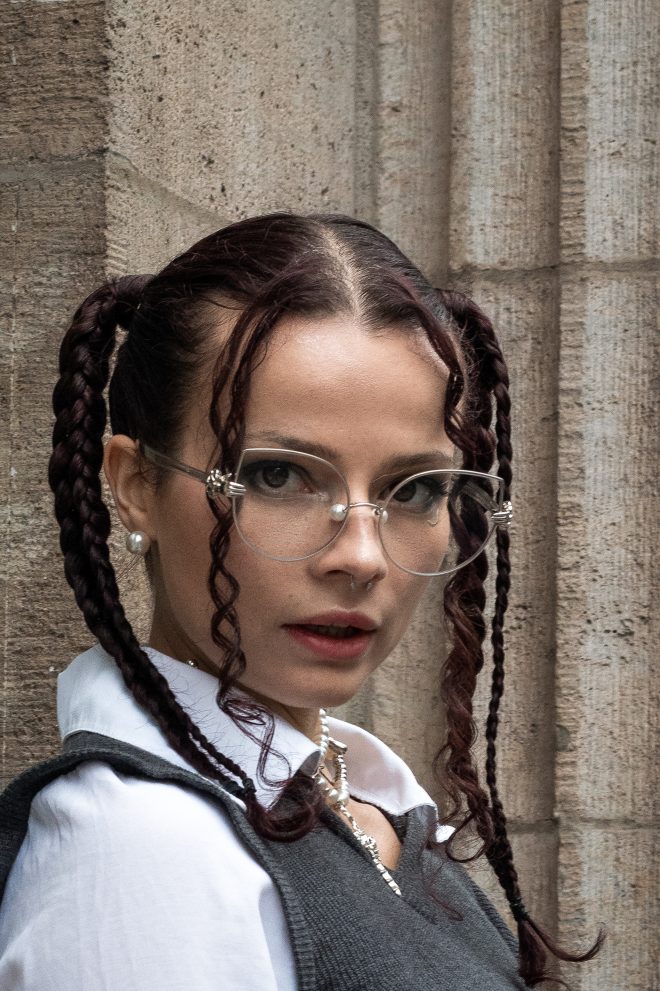
LETHE: Between the Worlds gathers the threads Laura Korinth has followed for years: independent production, mythology and the difficult work of reconstructing a personal history. Around the album, she is building an archive of the music, images and experiences that brought her here. At a time when artificial intelligence is unsettling ideas of authorship and ownership, the German artist wants to keep that history, and the right to tell it, in her own hands.
For three years, Angel existed everywhere except in public. Korinth finished the track in 2021. It had its premiere on a London stage the following year, in a performance with Capital Ballet, and she filmed its video in 2023. Still, she was not ready to let it go.
“It took me three years to release ‘Angel’ because of its religious symbolism. I needed that time to work through it and make peace with it. Light and dark belong together, and this song is my way of showing that.”
By the time Angel appeared on 11 November 2024, Korinth had spent years teaching herself to produce, compose and mix. The goal was independence: control of the creative process, ownership of the recordings and the freedom to decide when the work was ready. Reaching that point took patience.
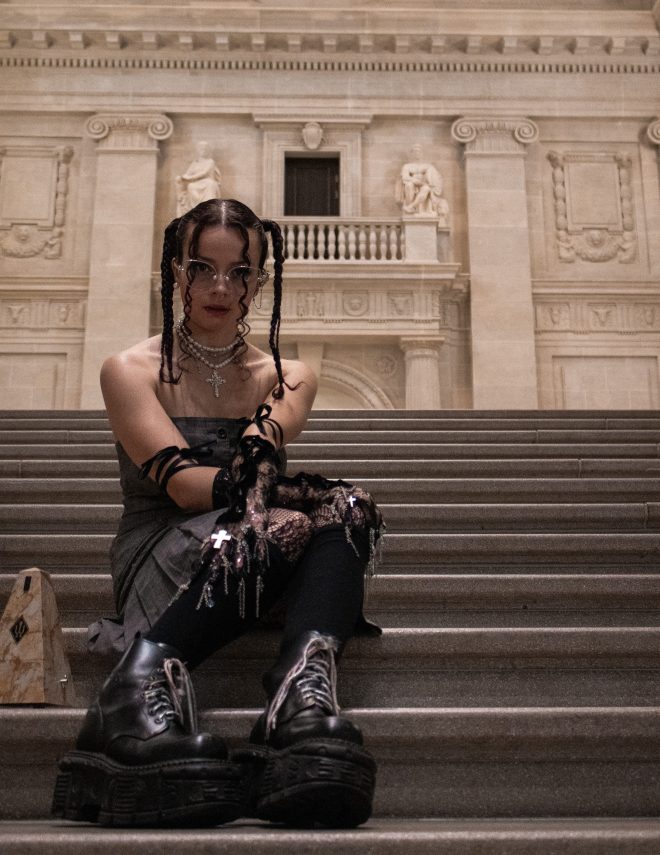
“This album is a dream I worked towards for a long time: learning everything myself, writing, arranging and producing the music myself, without depending on anyone else’s vision. It was a dream and a challenge at the same time. That is why full control, including over my rights, was non-negotiable for me. Knowing my rights stay with me gives me a deep sense of safety. For an artist whose work comes from the innermost parts of herself, that safety isn’t a luxury, it’s the foundation.”
When her first album, LETHE: Between the Worlds, arrived on 26 July 2026, it brought together a run of singles released over the previous two years: Angel on 11 November 2024, Transformation on 21 February 2025, Bride on 13 June 2025, BlackLit on 5 December 2025 and Copypaste on 1 May 2026. The album was not the beginning of Korinth’s work but the culmination of a longer process, gathering a sequence she had been shaping long before announcing it.
The path to Between the Worlds began with Free My Soul, Korinth's first release, written in California in 2017 and issued in 2018. Its references to mythology and identity anticipated questions that would remain central to her work. Korinth is the original creator of the Between the Worlds universe, which she began building in 2020 and 2021 while learning the production skills needed to make it tangible. It grew out of her roots, her past and a personal necessity.
Korinth grew up in a village near a forest, inside what she describes as a religious high-control environment that shaped her earliest sense of the world. Leaving meant questioning inherited beliefs and slowly building an identity beyond them. For a time, she attended Bible courses by day and underground clubs by night, moving between communities that seemed to demand different versions of her.
At first, the underground offered a new kind of freedom. In time, however, she discovered its own unwritten rules. The music industry raised further questions about authority, belonging and independence.
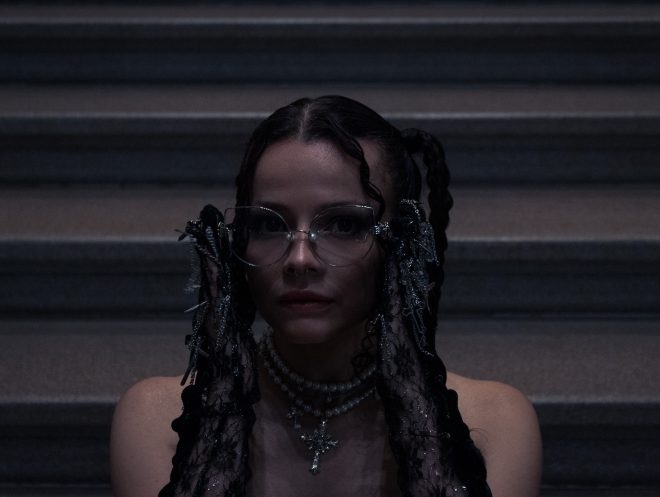
“I lived in parallel identities for a long time. Growing up in a religious high-control group and rebuilding my identity from scratch is something very few people experience.”
A 2018 journey to Corinth gave Korinth’s family name a physical landscape. At Acrocorinth, a site associated with Aphrodite, her interest in Greek mythology, and its stories of transformation,
death and rebirth, deepened. Another part of her history reaches across the Atlantic. Through her great-grandmother, Korinth has a distant family connection to the Lokono people of South America, though she does not describe herself as Indigenous. The tradition was not passed down in her family. During a visit to an anthropological museum in Guyana, she found her way to the Lokono language and wrote down what she learned there. Since then she has explored the language and its ritual elements in her compositions.
The album takes its name from Lethe, the river of forgetting in Greek mythology, whose waters allowed souls to leave their previous lives behind before rebirth. Korinth recognised something intimate in that story: the possibility that experiences can shape a person without determining who they must remain.
Makaron’s Salvation turns to Nesoi Makaron, the Isles of the Blessed, which Korinth describes as the highest place of peace in ancient myth. In the tradition she references, souls reach the islands after living three just lives. Korinth reinterprets that progression through her own story, using it to look back at three chapters of her life. Korinth first produced the song in summer 2025. Greek mythology has run through her work since Free My Soul in 2018, and the song’s idea of peace also echoes a 2017 trip into the Amazon rainforest, where she spent four nights sleeping in a hammock.
“For me, it meant freeing myself three times: from the group I grew up in, from the underground scene, where even freedom came with its own rules, and from other people’s ideas of who I should be, through my own creation. In the background I chant a Lokono word from the notes I made in Guyana: ‘Yabaho’, which, as I understand it, means ‘in this place’. The song is my statement that I’ve come through all three, and that I’m free.”
Taking charge of the album changed more than Korinth’s working process. Decisions that once depended on other people, how a track should develop, when it was finished and where it belonged, became hers to make.
“Now I was able to create the soundtrack to my story myself. Before, I created the voice. With this album I took primary responsibility for the composition and production, so I can shape the story from beginning to end.”
Keeping the Record
Since 2016, Korinth has documented her work, saving photographs, publications, recordings and other traces of her artistic development. Much of the material stayed out of sight while she made new music and visual work. Only when she began organising it did the scale of what she had preserved become clear.
Together, those materials form an archive of music, imagery, performances, research and personal history. Early experiments sit beside recent projects, allowing Korinth to see not only what changed, but how one idea led to another.
“I realised early on how important it is to save and protect what you create, but it became real after my comeback in 2024 with my self-produced music. I went in naively, simply happy that I had dared to release a song. Over time I saw how quickly things travel and change, and how my symbols and ideas lost some of their meaning along the way. That was a painful lesson, and it taught me to keep my art in my own hands. Archiving calms me, because I know it will outlive me.”
The rise of generative artificial intelligence has given that work a new urgency. Images, musical signatures and writing can be reproduced or recombined with remarkable ease, often without preserving the context from which they came. For Korinth, debates about consent and attribution are no longer abstract; they touch the materials through which an artist becomes recognisable.
“AI can analyse almost everything: symbols, colours, fabrics, structures, words, beats, stories, voices and biographies. That AI can analyse such materials does not mean that their meaning, origin or the people behind them can simply be disregarded.”
This has made Korinth attentive to the practical side of ownership. Original files, dated records and evidence of a work’s development can help establish its history when questions about attribution arise. Her archive is therefore both personal record and practical protection.
“For me, archiving is a political act, and part of my identity. It’s comforting to know the truth is written down.”
Parts of Korinth’s story now live in public collections, including the Archive of Youth Cultures, the National Library of Guyana and FFBIZ in Berlin, one of Germany’s oldest feminist archives, which has collected the history of the women’s movement since 1978. The National Library of Guyana carries particular weight: through her mother, part of her family history leads to Guyana, and that connection continues to surface in the work Korinth makes.
She also values the people who decide what these collections preserve and how the material is understood. Every archive is shaped by human judgement, by choices about what matters, what belongs together and what context must not be lost. Those decisions feel especially significant as automated systems play a growing role in how culture is made and encountered.
In a March 2026 Mixmag essay, a summary of her academic work in her own words, Korinth explored related concerns through what she calls the Gaia principle, arguing for greater structure within electronic music culture. For independent artists, she believes that preserving original material and keeping reliable records can offer a measure of stability in an industry where creative work often travels faster than the systems meant to protect it.
The archive keeps expanding, but its value is not only in what it preserves. It also invites Korinth back into earlier versions of her work, and of herself, that might otherwise remain forgotten in storage.
An Identity That Can Be Entered
The archive is also taking on a spatial form through a three-dimensional project by Dominic Duan, a researcher and designer at the London College of Fashion, University of the Arts London.
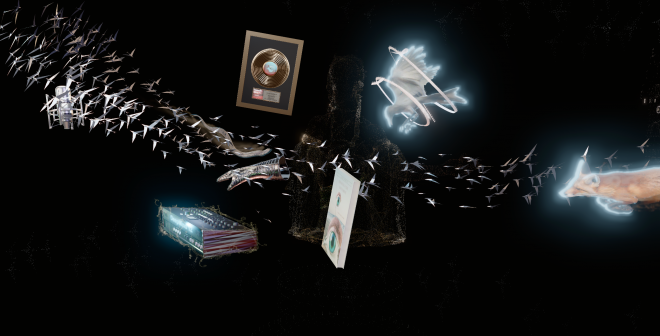
Duan is translating the relationship between Korinth’s visual identity and lived experience into an interactive environment. Visitors will be able to move among recurring symbols and trace their connections to her music, personal history and creative choices.
“When visitors open the 3D archive, they immediately see an artist’s visual identity formed from representative visual symbols. Through interacting with the 3D elements, they gradually understand the connections between this identity and the artist’s experiences, choices and creative work. This helps audiences recognise that a fully developed artist identity does not emerge from nowhere or simply result from planning, but takes shape through personal culture, lived experiences and ongoing creative practice.”
Unlike a conventional chronological archive, the three-dimensional environment places different periods of Korinth’s work within reach of one another. A visitor can move between visual elements and the materials connected to them, following relationships that a timeline might leave hidden.
Duan imagines the project changing as Korinth does. New recordings, performances and visual works could enter the environment alongside older material, turning the archive into a record not of a fixed identity, but of one still unfolding.
“In five to ten years, I could see it becoming a living archive that grows alongside the artist’s practice. New works and perspectives could sit alongside earlier records, showing how the artist’s identity develops over time. My hope is that it becomes a lasting resource under the artist’s control, a place where audiences can explore their work in context, and where the artist can reflect on and tell their own story.”
“The archive reminds me why I make music at all. I never started out of pride or to fight anyone, but out of curiosity. The beginning was innocent, pure and beautiful, and what came later, the hard experiences along the way, doesn’t have to be the whole story. When I archive, I don’t forget that beginning.”
Korinth wants to make more music, develop new visual work and gather experiences she will be glad to remember. The archive gives those moments somewhere to rest before she has to decide what place, if any, they will occupy in the larger story of her career.
Her concerns about artificial intelligence have not disappeared. Korinth remains alert to the pressure it places on independent artists and to the growing difficulty of protecting creative work. But beneath her insistence on documentation and attribution lies a simple demand: that the people behind artistic ideas should not vanish from their own stories.
Birds have long been part of her creative life. She watched them while writing her poetry collection The Late Bird Chirped (Der späte Vogel zwitscherte), and her alter ego Screaming Bird accompanied her first steps in music production. Away from her work, Korinth still finds relief in small encounters with the natural world. On the final day of finishing the album, she found an owl feather. She is drawn to crows for a different reason: their ability to recognise human faces and remember them over time.
Sometimes, Korinth wonders whether a crow she has met before already recognises her. The possibility makes her smile.
Like memory itself, the archive remains unfinished, open to whatever Korinth creates next. Her next single follows on 27 November 2026. More of her work can be found at laurakorinth.com.
