


GINA DEMARCHI: WHAT REMAINS AFTER THE MUSIC
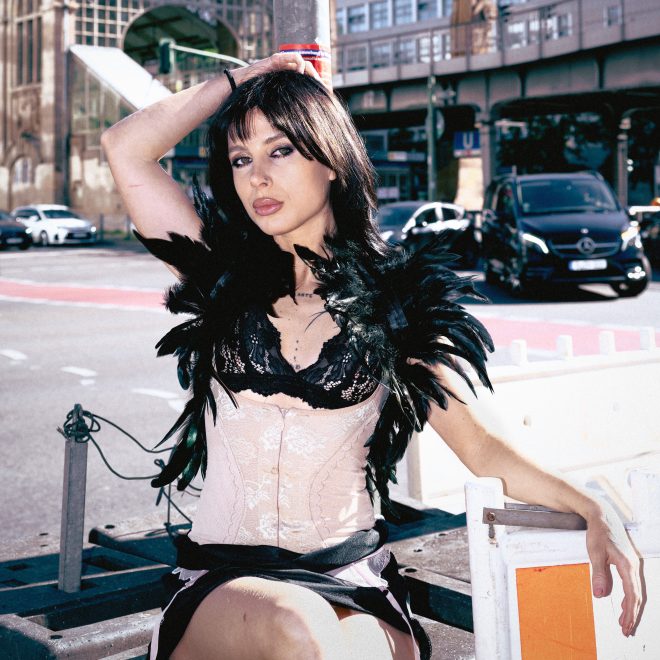
From Buenos Aires to Europe’s underground, Gina Demarchi has spent nine years shaping a sound driven by hypnotic tension and rhythmic sensuality. With new releases and vinyl projects underway, she reflects on artistic identity, contrasting club cultures and her desire to make music that outlives the moment.
Nine years into producing, Demarchi pays close attention to every decision surrounding a record: the sounds, their sequence, the label releasing them and the ideas they carry. Her early exploration of techno has matured into a focused practice where creative freedom meets discipline.
Releases such as Strada In Fiamme, RAW 001 and Veil capture different stages of that development. Hypnotic repetition, dub textures and forceful percussion remain constants, but the way she combines them has evolved.
“Over the years, studying and understanding myself more deeply has helped me define my artistic and sonic direction. I’ve been producing for nine years, and I’m still learning and trying to improve with every track.
I’m interested in combining textures, saturation and layers to give each track its own dynamic. Early on, I had a certain sonic aesthetic, but it wasn’t fully defined. I experimented across different spectrums, moving from groove-led techno to old-school, dub, tribal and hypnotic sounds. I loved exploring.
Today, I identify much more strongly with my work. Each record has its own personality and reflects the concepts I want to express through my albums. At first, it was about limitless, raw creativity. Now, I place greater value on hard work, structure and study.”
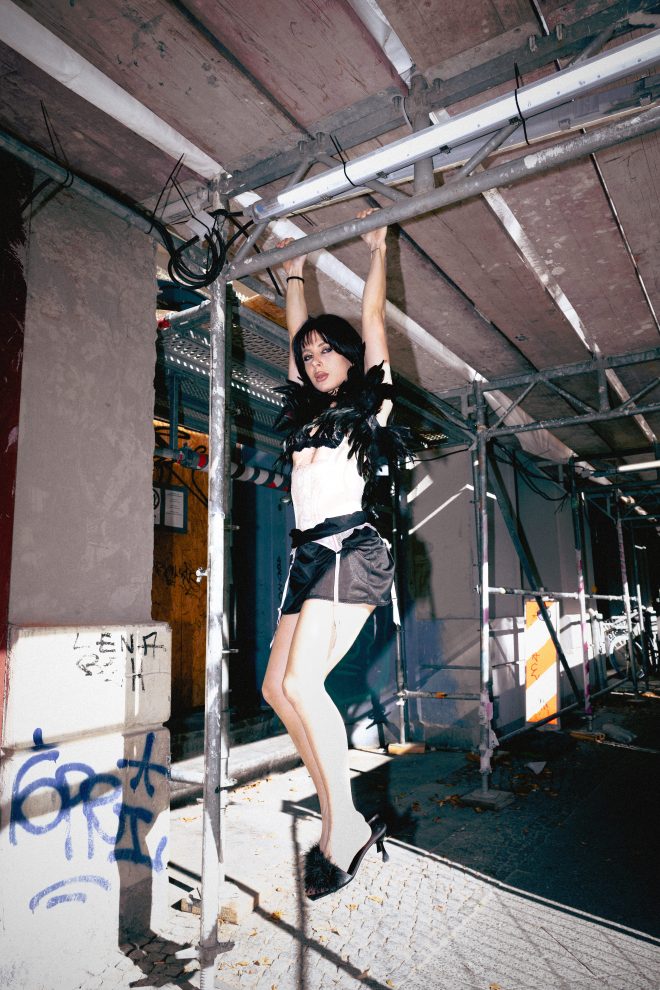
This evolution is clearest in her approach to labels. Instead of producing without a destination, Demarchi studies the catalogues and visual identities of the imprints she hopes to work with, then considers where her own language fits.
Her upcoming projects with Sexyrecc, CROWD, Planet Rhythm, Materia, Alan Fitzpatrick’s We Are The Brave and Regal’s Backspin Records allow her to explore different facets of her sound.
“I study each label closely. I want to know whether we share an auditory and visual aesthetic. Once I understand its musical concept, I begin shaping the record, always through my own interpretation. If I like a label, we probably share similar influences, so I never feel pressured to change my style.
I usually send five to eight tracks, sometimes ten, to show a broader range of what I can do. I prepare something specific for each label while staying focused on the music I love to make.
My release on CROWD, for example, was rawer and more rooted in dub techno. I could experiment with a 909-driven sound while retaining the dub elements that suit the label. With the other imprints, I’ve also been able to lean fully into the hypnotic side of my work.”
The attention she gives to the identity of each release is closely connected to her relationship with vinyl. In a scene increasingly shaped by digital distribution, the physical record continues to occupy a particular place in her work, both as a producer and behind the decks.
For Demarchi, its significance reaches beyond the familiar arguments surrounding analogue sound. Vinyl gives a piece of music a physical existence, something that can be kept, handled and passed between generations of DJs.
“For me, it’s about making it last over time, ensuring it doesn’t just vanish in a second. It is beautiful to have your piece of work pressed onto vinyl because it’s a relic. Thinking about how the first DJs only spun this format, and that we can still play and produce on vinyl today, makes it entirely worth it.
I’ll tell you a secret as well: I don’t like playing my own music digitally, but if there is a vinyl record of mine, I always play it. There is a certain magic that happens to me there. Generally, I like making music to leave a message and pass it on to others so it can be heard and played, but when there is pressed vinyl involved, I feel compelled to show it and play it. It feels like an act of gratitude, and being able to physically feel the vinyl makes me incredibly happy. It has a completely different mystique.”
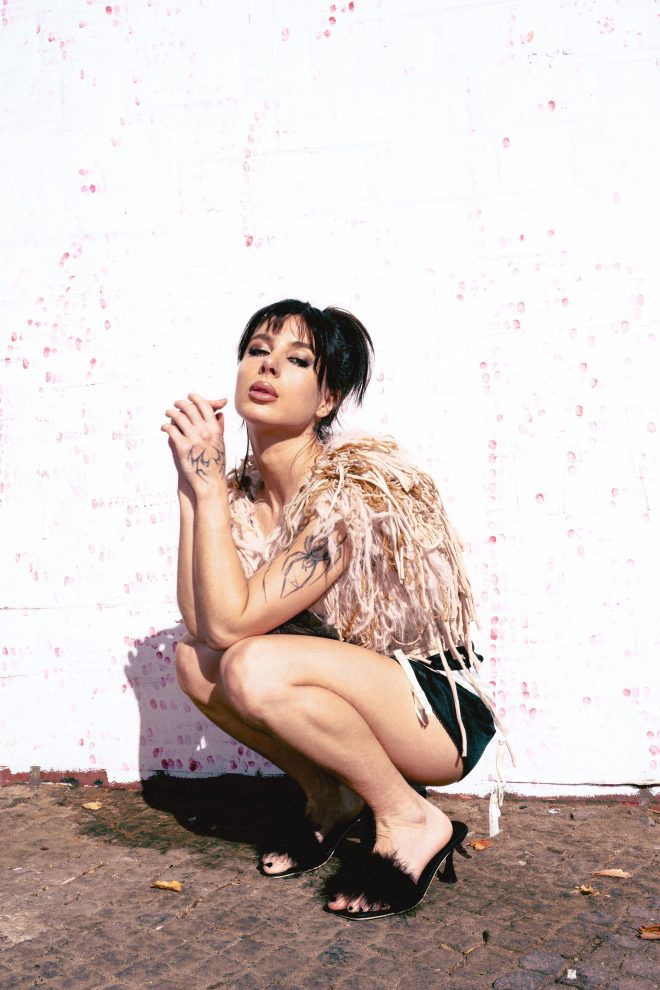
Her interest in the physical format also informs her ambition to eventually establish a label or platform of her own. Having worked with different imprints, Demarchi has developed a clearer sense of how she would like to approach releasing music, particularly in recognising the people responsible for making it.
“The important thing about working with labels is that, beyond any financial return, you can gain a clear vision of where you want to go with your music. However, I also feel that certain things should change. Sometimes very little credit or emphasis is given to the producer, when without the producer, the DJ wouldn’t exist. Therefore, I believe producers should hold a more prominent place.
My platform would focus on releasing vinyl and creating standout, individual pieces, as well as pushing for collaborations between different artists that haven’t been seen before. I love it when those b2b or collaborative projects form and multiple artistic visions blend into a single track. There is something beautiful about collaborating and creating alongside other artists. So, I would design it with that in mind: to provide visibility, and to unite artists and different cultures.”
Those cultural connections have become an increasingly important part of her own experience. Beginning in Buenos Aires, Demarchi has since travelled through Europe, Australia, Asia and Latin America, encountering scenes with different histories, audiences and expectations.
“I’ve learned that we all perceive music differently. There are places in the world where techno is just beginning to grow, where a more underground sound struggles to be received because digital platforms mostly showcase the commercial side of things.
There are other cultures and countries where the scene is highly developed, practically serving as the birthplace of underground techno history. In some countries, going to a club is more of a social stance, a place to chat and listen to music, while in other countries, it is strictly a space to dance, forget everything, and liberate yourself. You see that directly reflected in the crowd.”
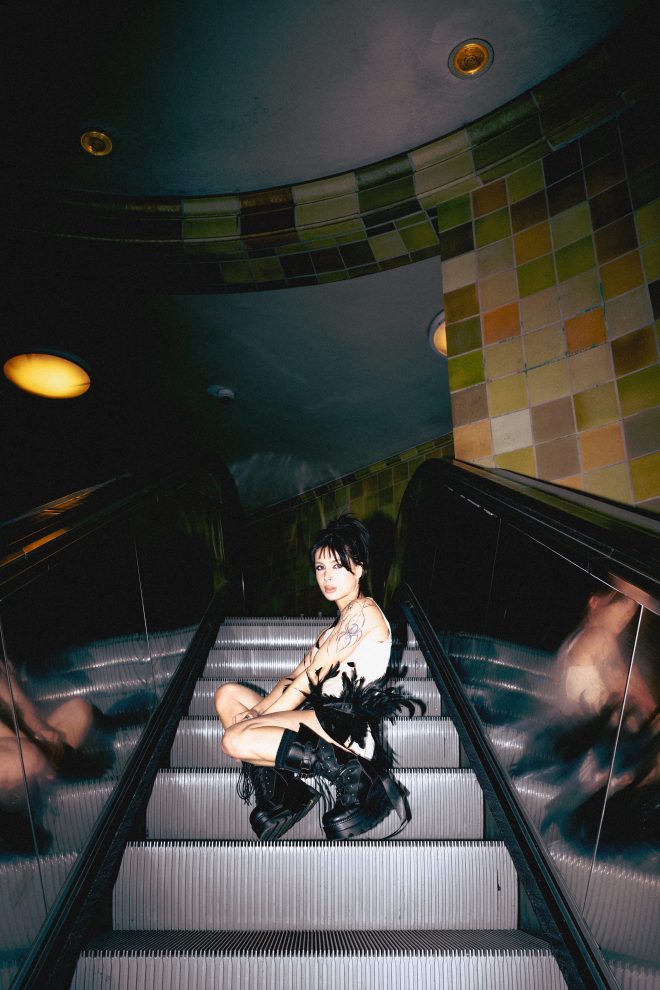
Her appearances at venues including Tresor, RSO, Den Anden Side and Rote Sonne have also required her to adapt to different environments without abandoning the musical language she has developed.
She organises her selections carefully, separating tracks according to genre and intensity, but prefers to leave the progression of a set open to the atmosphere of the room.
“It depends heavily on the set time and whether the space is more underground or massive. But generally, I always organize my music by intensity and through subfolders tagged by genre, which guide me toward where I want to go.
I usually like to build up the intensity throughout my sets. I enjoy guiding the crowd through more hypnotic and sensual places at the beginning, transitioning into a more intense techno sound, and closing with something more melodic or dub. To be honest, though, it relies heavily on how my energy feeds back with the audience. I like giving myself the freedom to feel the room rather than delivering something programmed. I want to be organized but entirely spontaneous in the moment.
I enjoy organizing vinyl sets much more than digital ones. Today, with digital, there is so much music out there that sometimes everything sounds a bit similar, and the sheer volume can be overwhelming, even though I have my top five producers who are never missing from my crate. With vinyl, the selection process is different because it depends entirely on the specific records I buy for that show. It becomes a much more curated selection.”
The influence of travelling has not remained confined to her performances. Spending time in Europe, particularly within Berlin’s club culture, has affected her artistic decisions and the way she approaches production.
Listening to other artists, observing their methods and experiencing unfamiliar environments have become part of an education that continues outside the studio.
“Especially when I go out to listen to something I love, or to see a specific DJ and producer, I always watch what they do and listen closely. That sparks new ideas and opens my mind.
Furthermore, understanding the world, different cultures, and different people naturally turns you into a new version of yourself. I can assure you that my artistic decisions have completely shifted since I went to Europe compared to where I originally come from. I have been 100% influenced by the processes I went through and those travels.
The European and Berlin scenes are incredibly powerful, and I feel I absorbed a lot of who I am today by traveling and living abroad for a few months. At the same time, I am very clear about where I come from, how beautiful my country is, and how deeply artistic it is.”
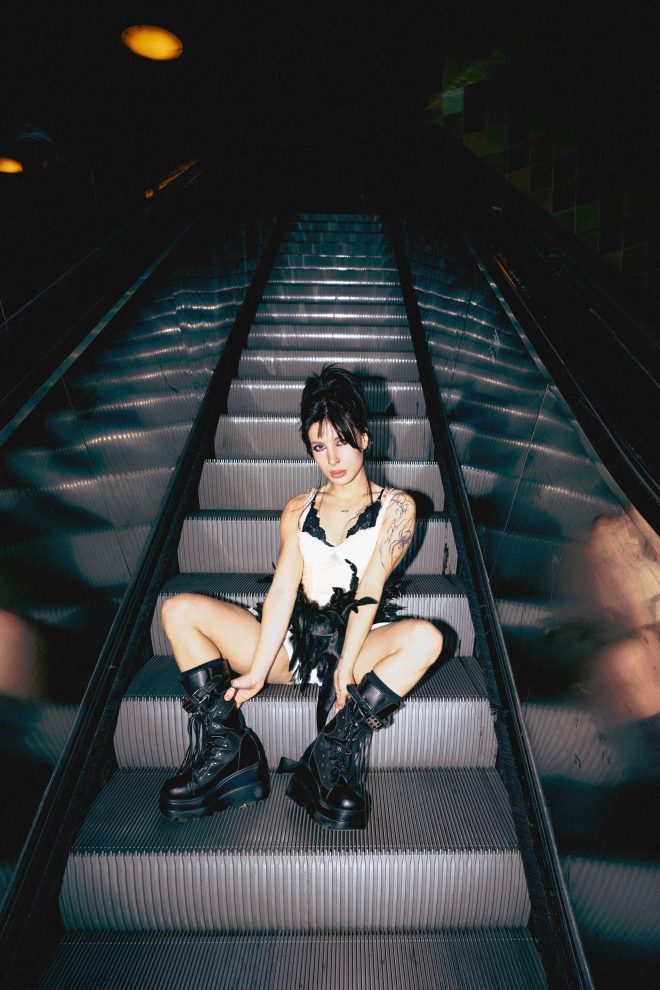
With further releases and vinyl projects planned across 2026 and 2027, Demarchi is entering a period shaped by the relationships she has established and the musical direction she continues to refine.
The possibility of reaching new venues, working with admired artists and eventually creating her own platform remains important. Yet her understanding of progression is less concerned with external milestones than with preserving the motivation behind the work.
“My artistic projection is to keep feeling this passion for what I do, and to never let it go. Making music makes me feel alive, like I have a purpose. Obviously, I hope that keeps expanding, and that I continue to have the opportunity to connect with other venues and clubs that I deeply yearn to play.
For the future, I hope to keep being myself. Despite the trends and this fast-paced world, I want to remain faithful to what I feel and to my way of creating. I also want to connect with my peers. Working with and reaching the artists and labels I dream of makes me feel like I am on the right path.
Ultimately, I hope that when people receive my music, they walk away with a feeling, a message.”
